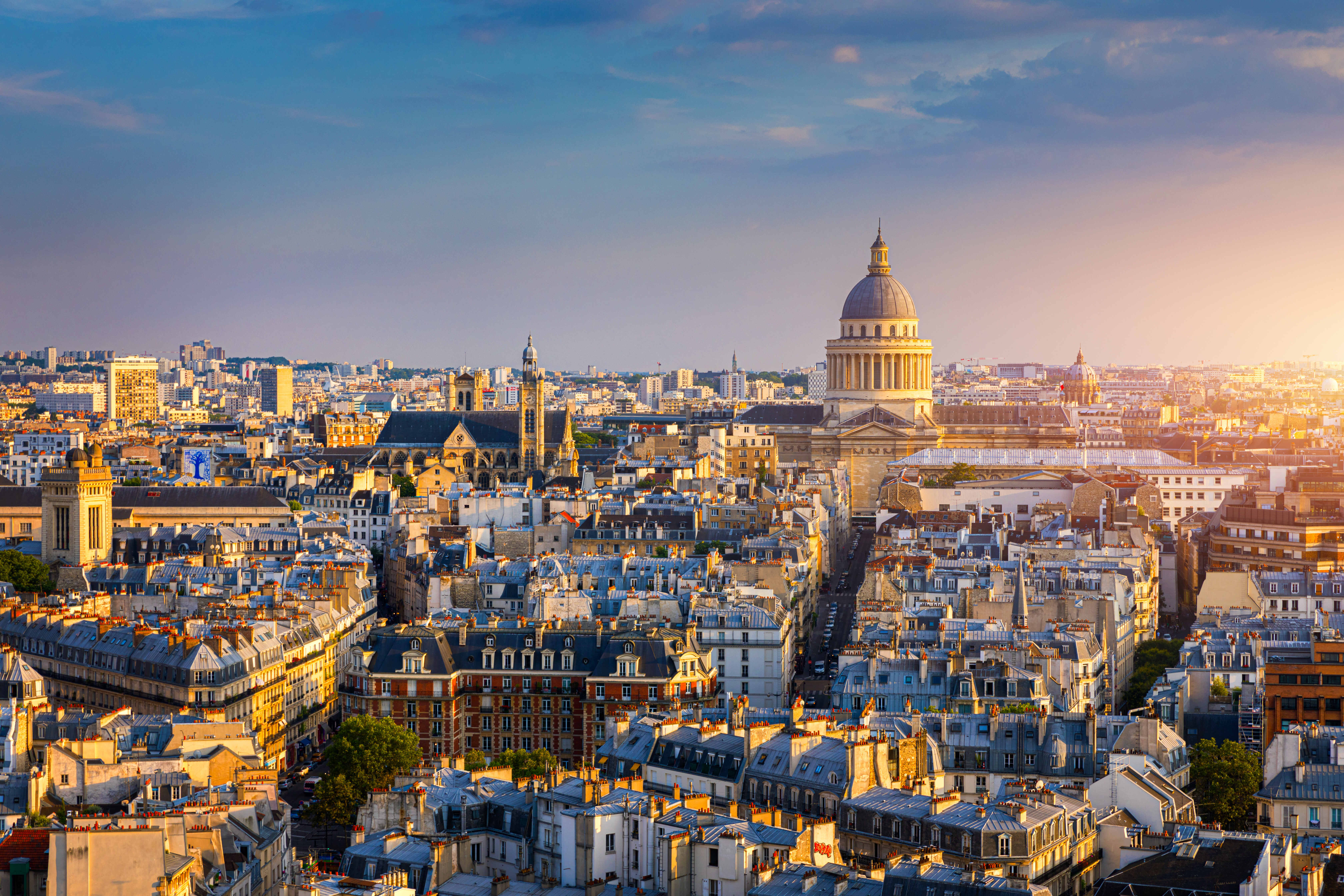
An extraordinary monument: the Panthéon
In the heart of the Latin Quarter, the Panthéon is a secular temple devoted to the nation’s great men — and women! Yet behind its imposing colonnade and its dome, visible from afar, the building holds many secrets.
A temple to the nation
Although the Panthéon has been inseparable from the Republic and the nation whose heroes it houses since the French Revolution, that has not always been the case. Despite its architecture recalling ancient Greece, the Panthéon was originally a church commissioned by Louis XV. After being deconsecrated during the Revolution, it became a church again several times in the 19th century, only returning to its secular purpose under the Third Republic.
Who should be welcomed?
Although the question of admitting a particular figure to the Panthéon regularly makes the news, the debate is nothing new. There are many stories of people who were intended to be honoured there but never were, such as Descartes and Viala, and of others whose remains were admitted then eventually removed, such as Marat and Mirabeau. Intended to house its heroes, the Panthéon is also a place of science, lending itself to key experiments: Foucault’s pendulum, wireless telegraphy and the fundamental point of the New Triangulation of France…
A visit to the Panthéon offers the opportunity to reflect before the tombs of Simone Veil, Jean Moulin, Hugo and Jaurès. It also holds many secrets that make a visit even more fascinating. Discover them during your stay at Hôtel Eiffel Blomet.
*****
Photo credit: daliu
Hotel Eiffel Blomet, a 4-star hotel in the heart of Paris’s 15th arrondissement